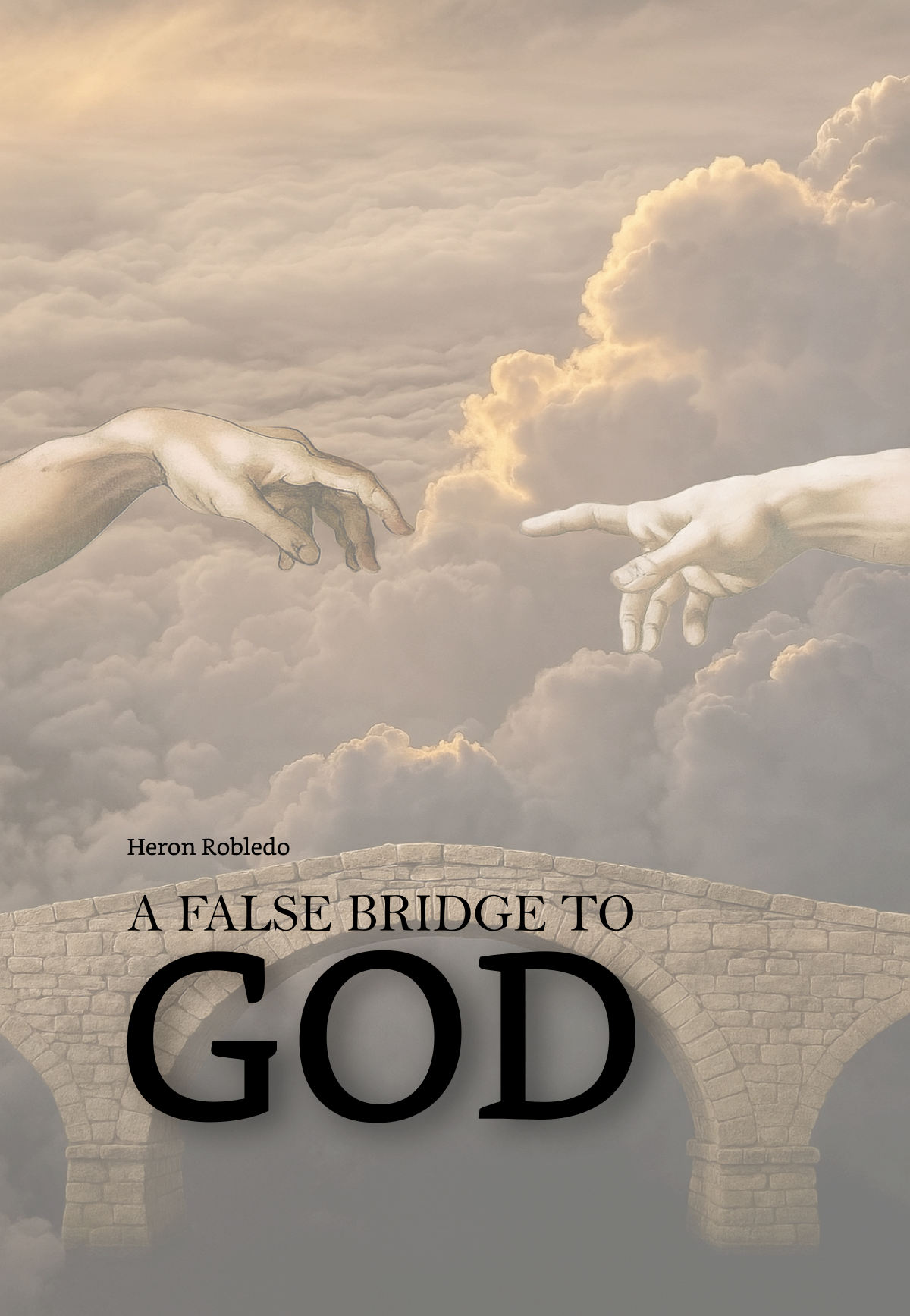
Behind glowing stages, rehearsed sermons, and explosive religious movements, something sacred is being quietly twisted. In A False Bridge to God, Heron Robledo investigates the growing industry of faith turned spectacle — where preachers sell blessings, churches resemble corporations, and the message of Christ is buried under noise, marketing, and ambition.
With sharp prose and fearless research, the book exposes how modern apostolic titles, prophetic conferences, emotional manipulation, and pay-for-blessing schemes deviate from the gospel.
Divided into two parts, including The Occasional Apostolate and A False Bridge to God, this work calls readers not to abandon belief — but to return to its core.
A necessary book for those disillusioned with religion yet still drawn to Christ.
Chapter 7 – Miracles, Bargains, and Heresies.
When the extraordinary is staged to keep audiences loyal — and paying.
The service started late, as usual. The lights dimmed, the sound intensified, and the atmosphere was slowly built. It was campaign night. A healing campaign, a restitution campaign, a night of the impossible. On the screen, phrases like “Tonight Heaven Will Open” and “Get Ready to Experience the Supernatural” alternated with images of crowds crying, jumping, fainting.
Everything seemed meticulously calculated.
The guest preacher didn’t enter immediately. He was announced. The band performed a long instrumental while a voice, in movie trailer style, praised his credentials: man used by God, performer of signs, channel of miracles. By the time he finally appeared, the crowd was already in a trance.
The first hour was pure emotional setup. Shouting, theatrical gestures, hypnotic phrases. Slowly, people began to react. A man dropped to his knees. A woman started spinning. A young man sobbed against the wall.
But nothing had been said yet.
When the sermon finally came, the content was generic. Emotional stories, random verses, promises of breakthrough. The focus was the atmosphere, not doctrine. The goal wasn’t to teach — it was to induce.
Then came the moment of miracles.
The preacher stepped down from the stage, walked among the crowd, touched a young man’s head, and said, “God is showing me that you’re having back problems. Have you been in pain?”
The young man, visibly surprised, replied, “Yes, I have.”
The crowd erupted. It was like watching a magic trick presented as a divine revelation.
There was no verification. No exams, no prior testimony. Just the moment. The emotion. The crowd’s reaction.
Then came the miracles of hearing, of sight, of finances. People collapsed. Others delivered envelopes. Some just watched, unsure whether to believe what they were seeing.
A few days later, I interviewed one of the event organizers. Off the record, she revealed that some of the “healed” were already known to the team. That certain testimonies were pre-selected. That instructions had been given about how to react on stage.